Dental treatment under general anesthesia
For some children, treatment while awake isn't possible or safe. Under general anesthesia your child sleeps while we finish all the planned treatment in hospital, usually in one visit, and goes home the same day.
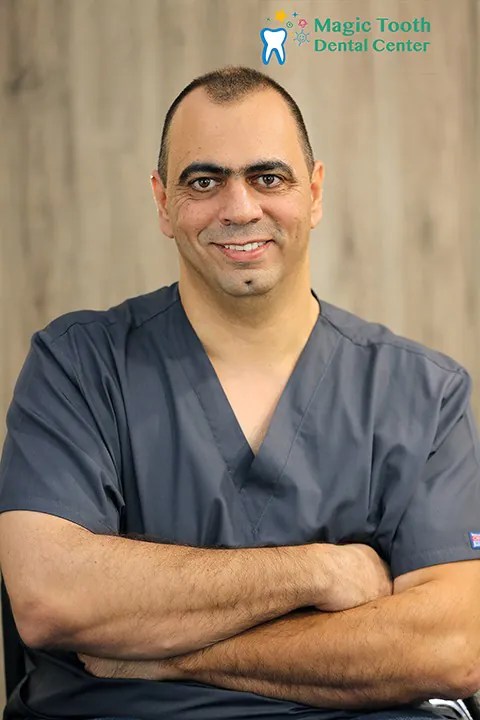 Clinical review: Dr. Farouk Rihani, consultant pediatric dentist. Reviewed November 2026.
- All treatment in one visit
- In hospital, with an anesthesiologist
- Home the same day
What general anesthesia means
General anesthesia is a controlled medical sleep given by an anesthesiologist. Your child doesn't feel, hear or remember anything. While your child sleeps, we treat every tooth that needs it: fillings, crowns, nerve treatment, extractions, cleaning and sealants.
A separate anesthesiologist stays with your child the whole time and looks after only breathing, oxygen and heart rate, while the dentist focuses on the teeth. This follows the American Academy of Pediatric Dentistry's guidance.
We do it only in a hospital, as day-case (outpatient) care. You come in the morning, treatment usually takes one to three hours, and after one to two hours of recovery healthy children go home the same day.
The day of treatment, step by step
Knowing what's ahead helps you and your child feel calmer.
Before
- Exam and planWe examine your child, take X-rays when possible and plan every treatment. You get a detailed cost estimate.
- Medical checkThe anesthesiologist reviews your child's health to make sure day-case treatment is suitable.
- FastingYou'll get exact times to stop food and drinks. Follow them carefully: an empty stomach keeps your child safe.
On the day
- Falling asleepMost children fall asleep breathing through a soft mask. Any needle goes in after they're asleep.
- TreatmentUnder constant monitoring, we finish all the planned treatment, usually in one to three hours.
Going home
- Waking upYour child wakes in a quiet recovery area with you. Some crying or dizziness on waking is common and passes.
- Home the same dayOnce your child is awake, comfortable and drinking, usually after one to two hours, you go home with written instructions.
Plan a quiet day at homeSoft food, plenty of fluids and an adult with your child for the rest of the day.
Is general anesthesia safe?
For healthy children, with a qualified anesthesiologist, full monitoring and a hospital setting, it has an excellent safety record. The risks are real but small.
- Common and short-lived: sleepiness, nausea, a sore throat or mild tooth soreness.
- Serious problems, such as breathing difficulties or an allergic reaction, are rare.
- Children under two, and children with breathing, heart or other medical problems, need extra care in planning. Rarely, a child needs to stay in hospital overnight.
- Tell us about a cough, cold or fever in the days before. Treatment may need to be moved.
After treatment, call us if your child has trouble breathing, keeps vomiting or can't drink, has bleeding that doesn't stop, has a fever, or is unusually sleepy the next day.
Laughing gas: the gentler option to try firstDental care for children with special needs
Who will see your child
We are Mai Altayeh and Farouk Rihani, consultant pediatric dentists working side by side at Magic Tooth Dental Center in Abdoun. Our work is children’s teeth, from the first tooth to the teenage years.
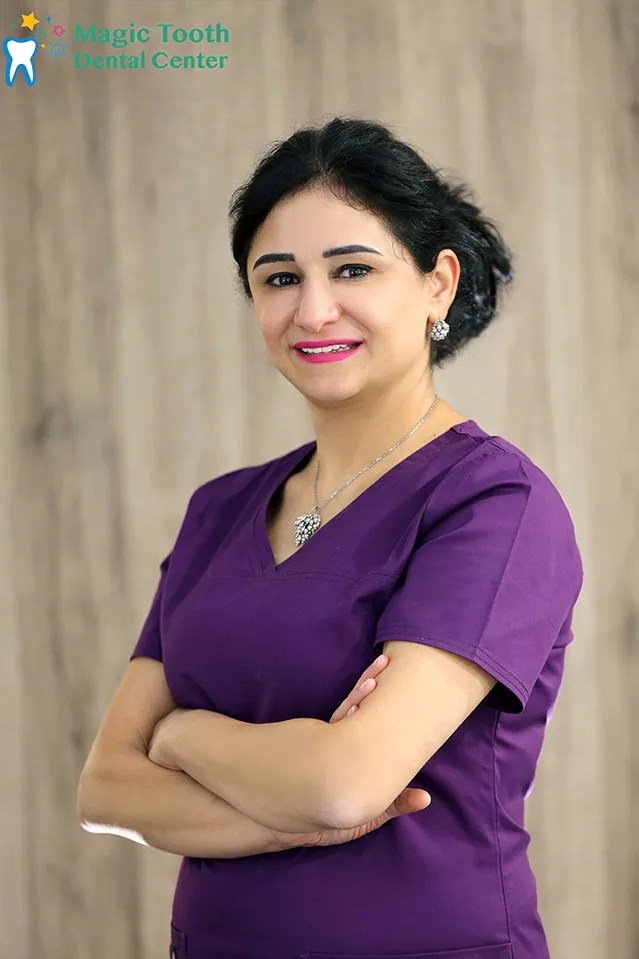
Dr. Mai Altayeh
Consultant pediatric dentist and special care dentist
MSc Pediatric Dentistry, University of Liverpool (2002). More than 20 years of practice, with laughing gas and treatment under general anesthesia.
Read profileDr. Farouk Rihani
Consultant pediatric dentist
Jordanian Board in Pediatric Dentistry (2004). More than 30 years in dentistry, with a special interest in children with special health care needs.
Read profile
Questions parents ask
Is general anesthesia the same as laughing gas?No. Laughing gas helps a child relax while awake. Under general anesthesia your child is fully asleep, feels nothing and doesn't move.
Will my child feel pain or remember anything?No. Your child is asleep. We also numb the mouth, so it stays comfortable for a few hours after waking.
Can everything really be done in one day?Usually, yes. That's the goal. Occasionally a treatment needs another visit, and check-ups afterwards are always needed.
Why can't my child eat or drink before?An empty stomach stops food or drink from going into the lungs during sleep. If the fasting times aren't followed, treatment has to be postponed for safety.
Who gives the anesthesia, and where?A qualified anesthesiologist gives it and stays with your child throughout. We do this treatment only in a hospital, as day-case (outpatient) care, so healthy children go home the same day.
Will my child need this every time?Usually not. Once the mouth is healthy and pain-free, most children manage normal check-ups, especially as they grow. Prevention at home keeps it that way.
Sources
- American Academy of Pediatric Dentistry: Behavior Guidance for the Pediatric Dental Patient
- American Academy of Pediatric Dentistry: Use of Anesthesia Providers in the Administration of Office-based Deep Sedation/General Anesthesia
- AAP and AAPD: Guidelines for Monitoring and Management of Pediatric Patients During Sedation (Pediatrics, 2019)
- Guy's and St Thomas' NHS Foundation Trust: Dental Treatment for Children Under General Anaesthetic
- NHS: General Anaesthesia
- Royal College of Anaesthetists: Patient Information
 Opening hours
 Contact details
- Clinic+962 6 593 7076, +962 6 593 6367
- WhatsApp and mobile+962 79 660 0883 (WhatsApp), +962 79 675 2509
- Email[email protected]
- AddressBuilding 192, first floor, Princess Basma Street, Abdoun, Amman
 The map loads from Google when you tap.