Dental anomalies in children
Some children have teeth that are extra, missing, unusually shaped or weak from the time they form. Finding these early lets us plan the right care as your child grows. Dr. Mai and Dr. Farouk both have a special interest in dental anomalies.
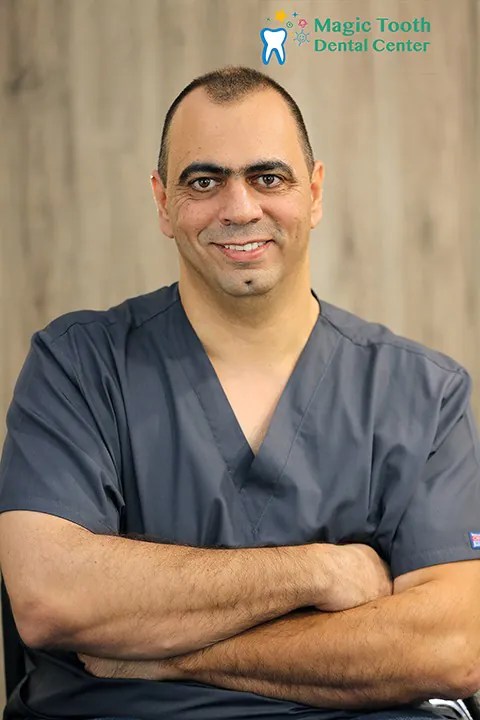 Clinical review: Dr. Farouk Rihani, consultant pediatric dentist. Reviewed November 2026.
- Found early on X-ray
- Planned as your child grows
- Gentle care for sensitive teeth
What dental anomalies are
Teeth can differ in number, size, shape or structure. Some children have an extra tooth, often between the upper front teeth, that stops an adult tooth from coming in. Others are missing one or more adult teeth.
Molar-incisor hypomineralization (MIH) is one of the most common. The first adult molars, and often the front teeth, come in with weak enamel that has white, yellow or brown patches. About one child in seven worldwide has it.
Rarer inherited conditions, such as amelogenesis imperfecta and dentinogenesis imperfecta, can affect all the teeth. These children need care planned over many years, often with other specialists.
How we manage them
Care depends on the anomaly and your child's age.
Finding it
- Exam and X-rayAn X-ray shows the teeth still under the gums, including extra or missing ones.
- A long-term planWe plan care for now and for the years ahead.
Weak, sensitive teeth (MIH)
- ProtectionFluoride varnish and sealants help protect the weak enamel.
- RepairFillings, or crowns for badly affected molars, stop breakdown and sensitivity.
- NumbingThese teeth can be hard to numb. We take extra time, and laughing gas can help.
Extra or missing teeth
- Extra teethRemoving an extra tooth around age 6 to 7 helps the adult tooth beside it come in.
- Missing teethWe plan with you whether to close the space or keep it for a replacement tooth later.
Checked regularlyChildren with weak enamel should be checked every 3 to 6 months.
Molars with MIH
Teeth with MIH can break down soon after they come in, so early care matters.
- Have your child's first adult molars checked as soon as they come in, around age 6.
- If your child avoids brushing because it hurts, tell us. A soft toothbrush and fluoride can help.
- Badly affected molars can be fitted with crowns to stop sensitivity and breakdown.
- Sometimes removing a badly affected first molar, usually between age 8 and 10, lets the next molar come in and take its place.
MIH isn't caused by poor brushing. It happens while the teeth are forming, before they come in.
Zirconia crownsInterceptive orthodonticsSpecial needs dentistry
Who will see your child
We are Mai Altayeh and Farouk Rihani, consultant pediatric dentists working side by side at Magic Tooth Dental Center in Abdoun. Our work is children’s teeth, from the first tooth to the teenage years.
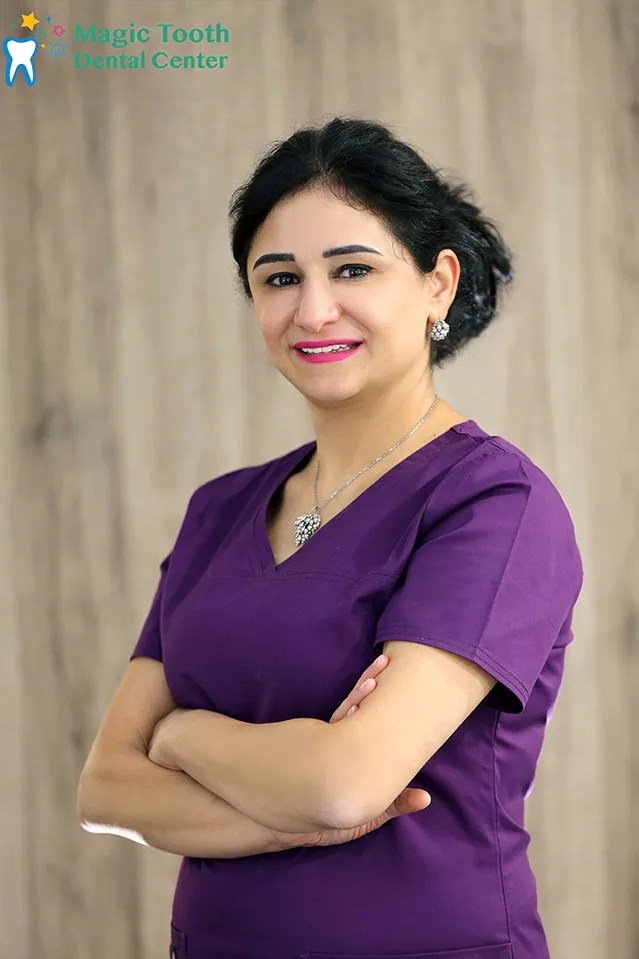
Dr. Mai Altayeh
Consultant pediatric dentist and special care dentist
MSc Pediatric Dentistry, University of Liverpool (2002). More than 20 years of practice, with laughing gas and treatment under general anesthesia.
Read profileDr. Farouk Rihani
Consultant pediatric dentist
Jordanian Board in Pediatric Dentistry (2004). More than 30 years in dentistry, with a special interest in children with special health care needs.
Read profile
Questions parents ask
Is MIH the same as decay?No. MIH is a weakness in the enamel from when the tooth was forming. But the weak enamel can break and decay more easily, so it needs protection.
Why are my child's teeth so sensitive?Teeth with MIH are often sensitive to cold, air and brushing. Fluoride, sealants and fillings can help.
My child's adult front tooth hasn't come in. Should I worry?If the tooth on the other side came in months ago, have it checked. An X-ray can show an extra tooth or another cause.
What happens if adult teeth are missing?It depends on which teeth. Options include closing the gap with braces, or keeping the space for a replacement tooth once your child has finished growing.
Are dental anomalies inherited?Some are, such as amelogenesis imperfecta and many cases of missing teeth. Tell us if family members have similar teeth.
Sources
- American Academy of Pediatric Dentistry: Molar-Incisor Hypomineralization
- European Academy of Paediatric Dentistry: Best Clinical Practice Guidance for Children with Molar-Incisor Hypomineralisation (2022)
- American Academy of Pediatric Dentistry: Management of the Developing Dentition and Occlusion in Pediatric Dentistry
- American Academy of Pediatric Dentistry: Guideline on Dental Management of Heritable Dental Developmental Anomalies
 Opening hours
 Contact details
- Clinic+962 6 593 7076, +962 6 593 6367
- WhatsApp and mobile+962 79 660 0883 (WhatsApp), +962 79 675 2509
- Email[email protected]
- AddressBuilding 192, first floor, Princess Basma Street, Abdoun, Amman
 The map loads from Google when you tap.