Teething guide
When your baby's teeth come in, what is normal, and how to soothe sore gums safely.
 Clinical review: Dr. Farouk Rihani, consultant pediatric dentist. Reviewed November 2026.
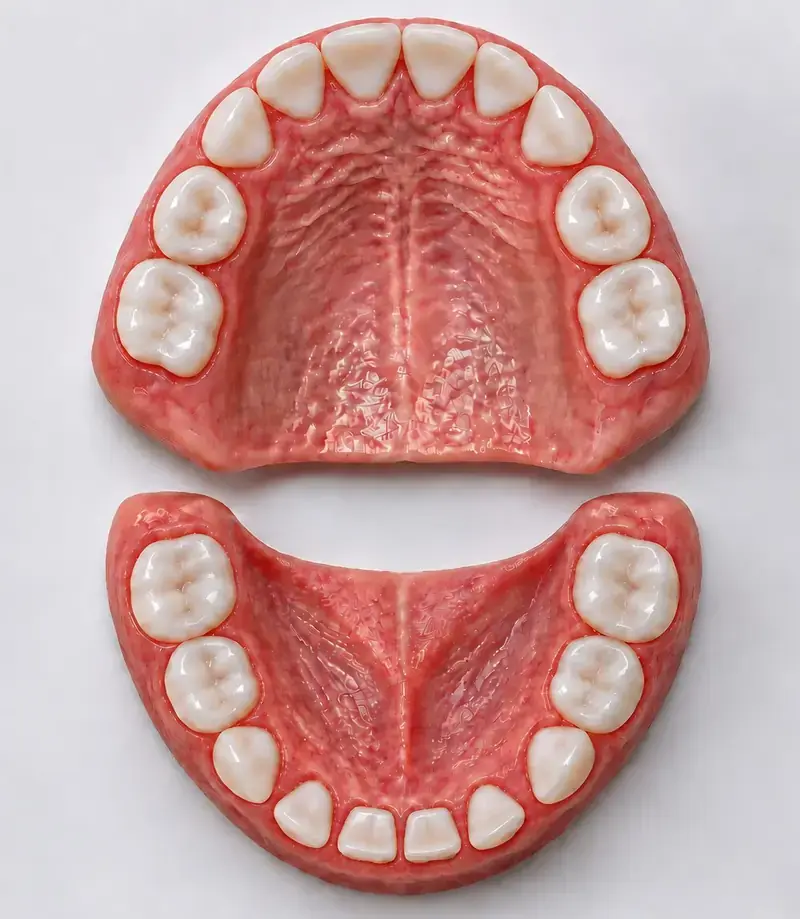
When baby teeth come in
Move the slider to your baby's age to see which teeth usually come in by then.
Usual number of baby teeth: 0 to 4
Coming in about now: upper central incisors and lower central incisors.
Book the first dental visit before the first birthday.
Ages are typical ranges from the American Dental Association's eruption chart. A few months early or late is normal.
Signs of teething
- Drooling, and a rash around the mouth from the drool.
- Chewing on hands, toys and anything in reach.
- Rubbing the gums, or a swollen, tender spot where a tooth is coming.
- Being a little more fussy than usual for a few days.
What the gums look like
Most parents notice these three stages over a few days to a few weeks.
Soothing sore gums safely
These follow the American Academy of Pediatrics' advice.
Rub the gums
- With a clean fingergently, for a minute or two
- Wipe the drool oftenprotects the skin
Something cool to chew
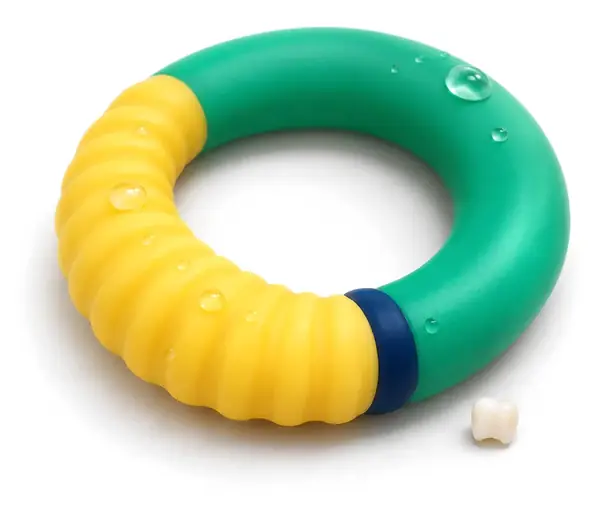
- A teething ring from the fridgechilled, never frozen
- Stay with your babywhile they chew
If it really hurts
- Ask your pediatrician or pharmacistbefore any medicine
- Use the dose on the labelfor your baby's weight
Most discomfortpasses in 2 or 3 days
What to avoid
These are sold for teething but can hurt a baby.
- Numbing gels and spraysBenzocaine products should not be used for children under 2. The US FDA warns they bring serious risks and little benefit.
- Teething necklaces and braceletsAmber, wood or silicone beads can strangle or choke a baby. The FDA advises against all teething jewelry.
- Homeopathic teething tabletsThe FDA lists them with the teething products that carry risks.
- Ice, frozen toys and hard foodsIce can hurt the gums, and hard pieces like raw carrot can cause choking.
First tooth, first steps
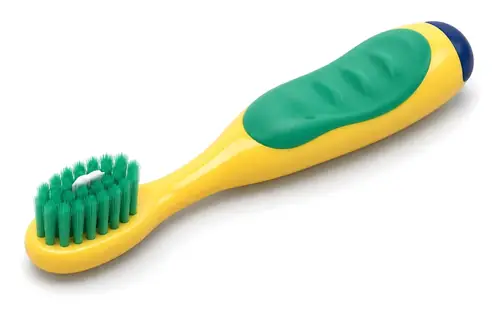
Start brushing as soon as the first tooth shows: twice a day, with a smear of fluoride toothpaste the size of a grain of rice.
Book your baby's first dental visit within six months of the first tooth, and by the first birthday at the latest.
Questions about teething
Does teething cause fever?No. A baby may feel a little warm, but a real fever is a sign of illness. Call your pediatrician.
Can teething cause diarrhea?No. Teething does not change how the gut works. If diarrhea lasts more than a day, call your pediatrician.
Which teething gel is best?We don't recommend numbing gels for babies. A clean finger and a chilled teething ring work without the risks.
When does the first tooth come in?Usually between 6 and 10 months, often a lower front tooth. Some babies are earlier or later.
Does teething keep babies awake at night?Teething alone rarely causes real sleep problems. If your baby cries a lot or wakes in pain, call your pediatrician.
My baby is one and has no teeth yet. Should I worry?Some babies are late. Mention it at the first dental visit and we will check.
Sources
- American Academy of Pediatrics. Teething pain relief (HealthyChildren.org).
- American Academy of Pediatrics. Teething symptom checker (HealthyChildren.org).
- US Food and Drug Administration. Safely soothing teething pain in infants and children.
- US Food and Drug Administration. Safety information on benzocaine-containing products.

Visit us
Magic Tooth Dental Center, 1st floor, Building 192Princess Basma Street, Abdoun, Amman
- Saturday to Wednesday
- 9 am – 7 pm
- Thursday
- 9 am – 2 pm
- Friday
- Closed
WhatsApp is answered in the evening too.